Project Overview
What a CNC Gear Shaping Machine Actually Solves (And Why You Landed Here)
If you’re searching CNC Gear Shaping Machine, chances are your production hits one of three walls:
- Internal gears / ring gears a hob can’t reach
- Shouldered blanks & double-gear clusters where a hob fouls
- Big, heavy workpieces that need rigid, repeatable tooth-indexing without “change-gear guesswork”
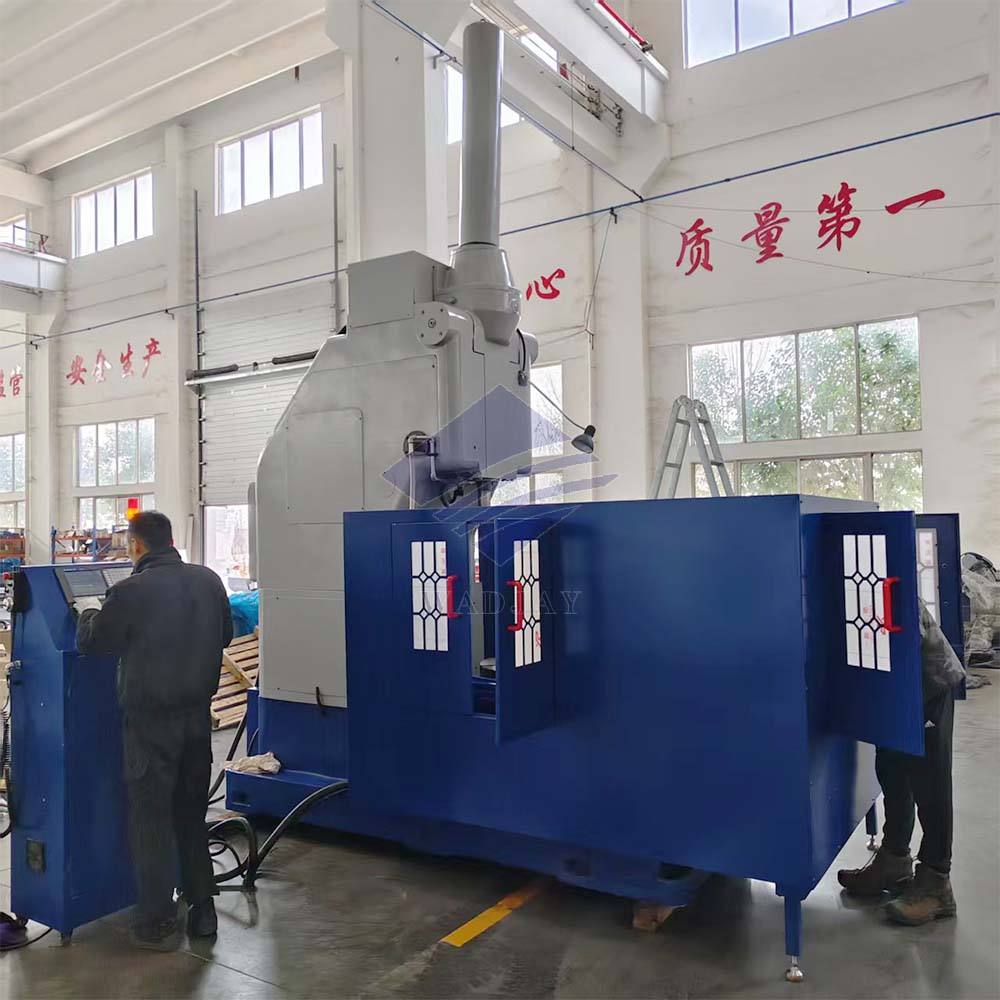
A CNC gear shaping machine replaces mechanical indexing with servo-controlled rotation & radial infeed, so tooth spacing, depth, and cutter reciprocation stay consistent batch-after-batch. The result is fewer rejects, less operator dependency, and a machine that can actually finish both internal and external cylindrical gears in one setup.
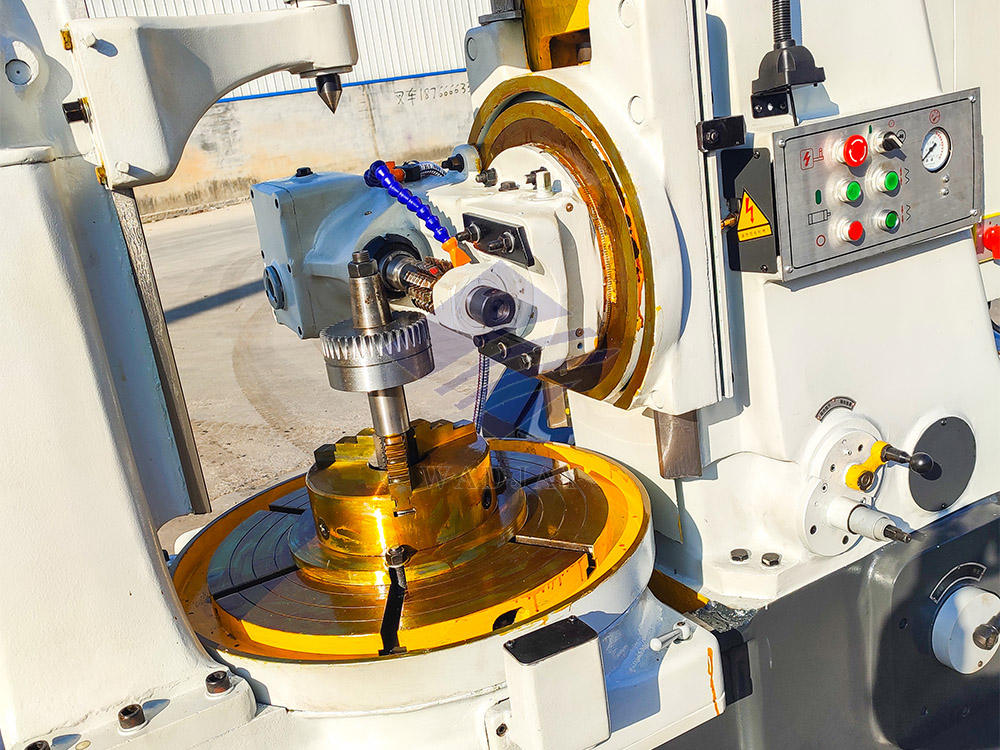
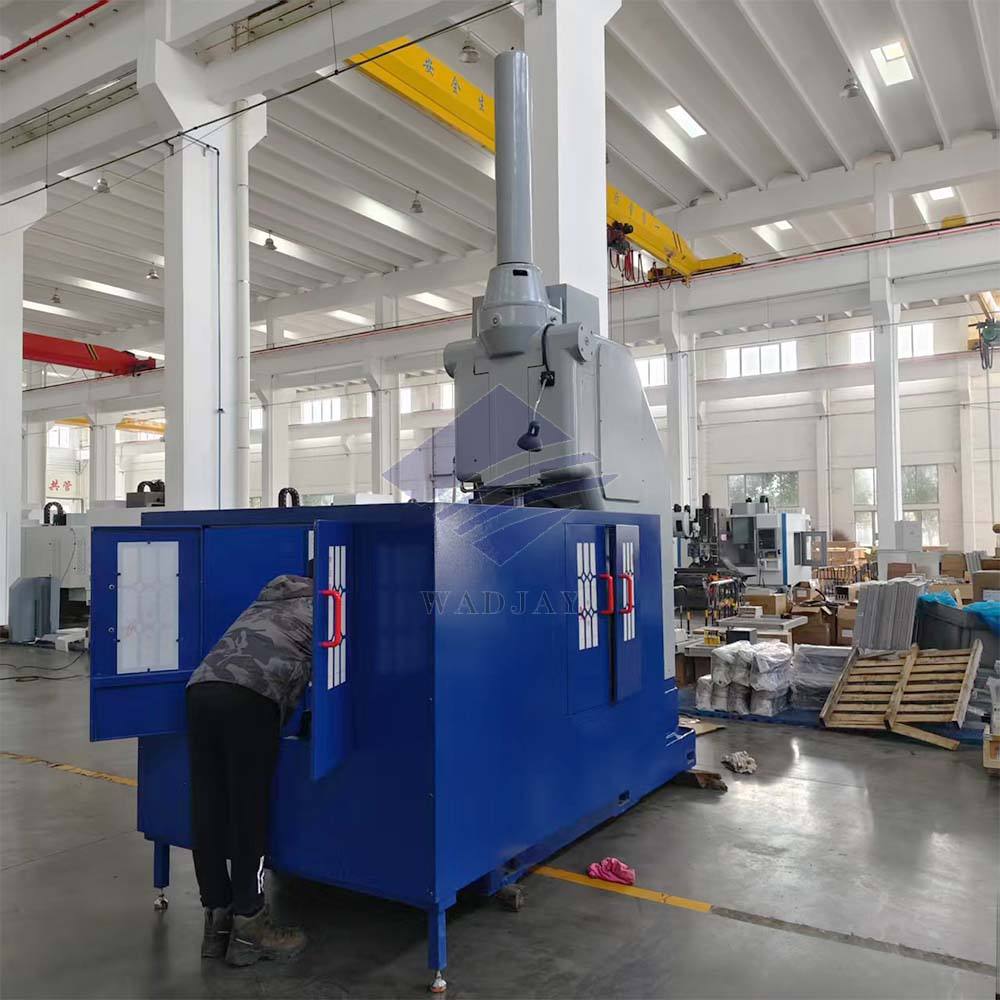
Flagship Spec Example: Y51125 CNC Gear Shaping Machine (1250mm Class)
| Parameter | Unit | Y51125 (Typical) |
|---|---|---|
| Max. External Gear Ø | mm | 1250 |
| Max. Internal Gear Ø | mm | 1250 |
| Max. Machining Module (M) | mm | 12 |
| Max. Workpiece Height (Face Width) | mm | 500 |
| Ram Stroke Length | mm | 250 |
| Stroke Speed | strokes/min | 20–100 (Adjustable) |
| Cutter Relieving (Return) | mm | ≥0.65 |
| Main Motor Power | kW | 15 |
| Accuracy Grade | — | GB/T 7 |
| Machine Weight (Net) | kg | ≈18,000 |
| Control System | — | CNC (Siemens/Fanuc optional) |
| Power Supply | — | 3Ph 380V/400V 50Hz (customizable) |
Where a CNC Gear Shaper Beats Hobbing (Key Buying Logic)
| Need | CNC Gear Shaping Machine | Gear Hobber |
|---|---|---|
| Internal ring gears | ✅ Native (cutter enters bore) | ❌ |
| Shoulder-adjacent teeth / clusters | ✅ Cutter clears shoulders | ⚠️ Fouling risk |
| Mid-module at large Ø (≤M12 @ ~1250) | ✅ Stable, rigid strokes | ✅ Faster, but profile limited |
| Max Ø / heavy roughing (>M12) | Limited | ✅ Better fit |
| Batch repeatability without change-gears | ✅ CNC indexing | Older mechanical = variable |
| Typical accuracy ceiling | GB/T 6–7 (by setup/tooling) | GB/T 5–6 (when grinding follows) |
Rule-of-thumb for search intent:
- You typed CNC gear shaping machinebecause you must cut internals or clusters → this is the right category.
- If you only have externals, high module, and Ø >>1250 → you probably want a hobber; we can route you to our CNC gear hobbing line instead.
How the CNC Gear Shaping Cycle Works (Plain English)
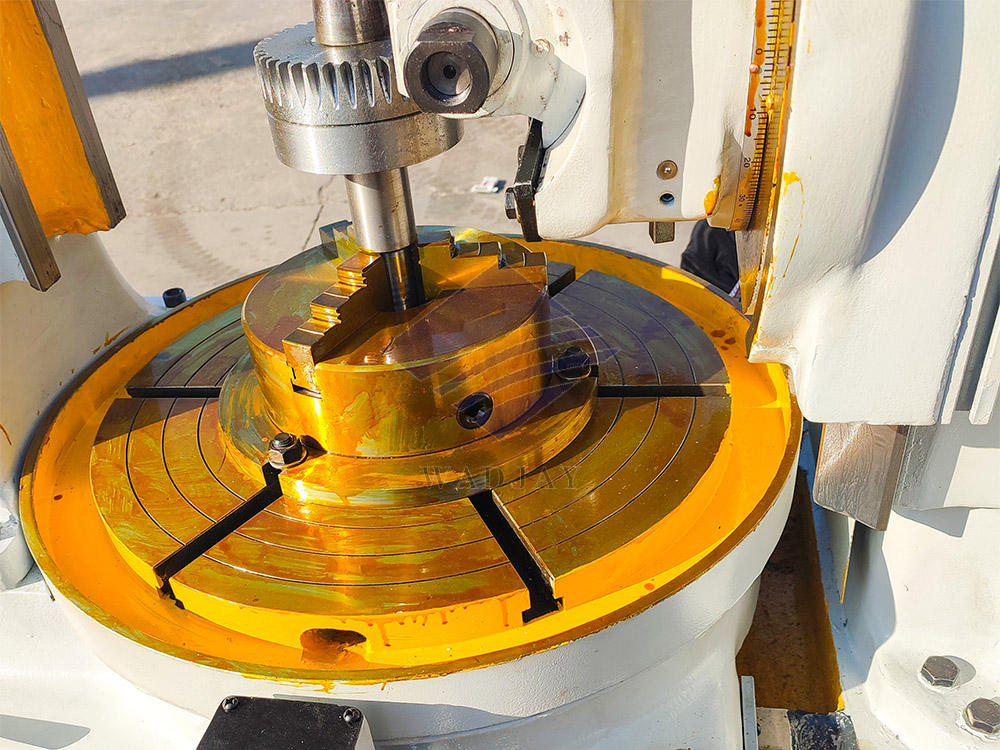
- Blank clamped on the rotary table; axial alignment checked.
- Shaper cutter mounted on the reciprocating ram; stroke length & top position set in the CNC.
- Ram reciprocates — cutting on the down-stroke; relieves (≥0.65mm) on the return to protect flanks.
- Table indexes (rotation) + radial infeed progresses the tooth space until full depth is reached.
- Finish pass cleans the profile; cycle repeats until all teeth are done — typically one continuous auto run.
- Coolant & chip control via enclosed cabin: cleaner shop, better tool life.
What Gets You GB/T 7 (and Stays There)
- Massive cast-iron column/base → damp vibration under interrupted cutting
- CNC closed-loop axes → consistent indexing, no creeping change-gear lash
- Correct cutter specs (tip relief, profile shift, rake) matched to material (steel/cast iron)
- Rigid workholding → face/ID/OD squareness is half the battle
- Coolant strategy → keeps cutter edge stable through long strokes
Typical Applications (Where Customers Actually Deploy It)
- Wind turbine gearbox internals / large ring gears
- Mining & construction reducer gears (slow-speed, high-load)
- Metallurgical mill drives & heavy conveyors
- Marine / crane / portal crane drivetrains (large Ø, shoulder conflicts)
- Industrial gearbox clusters (two gears on one blank, internal + external)
FAQ — Searcher Intent, Not Just Machinery Theory
Q: Is “CNC gear shaping machine” the same as a “gear hobbing machine”?
A: No. Hobbers roll a helical cutter continuously and excel at external gears. Shapers use a reciprocating cutter and exist mainly because internals and near-shoulder profiles can’t be hobbed cleanly.
Q: What’s the largest gear your CNC shaper handles?
A: This class (Y51125) goes up to 1250mm Ø and Module 12 with 500mm face. Bigger than that usually shifts to large hobbers or pit-type verticals.
Q: Can it do helical gears?
A: External helicals are possible with a helical (spiral) guideway attachment. Internal helicals are case-by-case and usually more limited—send the drawing.
Q: What accuracy can I expect?
A: Rated GB/T 7 for production-class work. If you need GB/T 5–6 as final, plan a shape + grind route.
Q: What info do you need to quote?
A: Gear drawing (OD/ID/M/face width/material) + annual qty + your voltage/standard + whether you need Siemens or Fanuc.
-300x300.png)