Project Overview
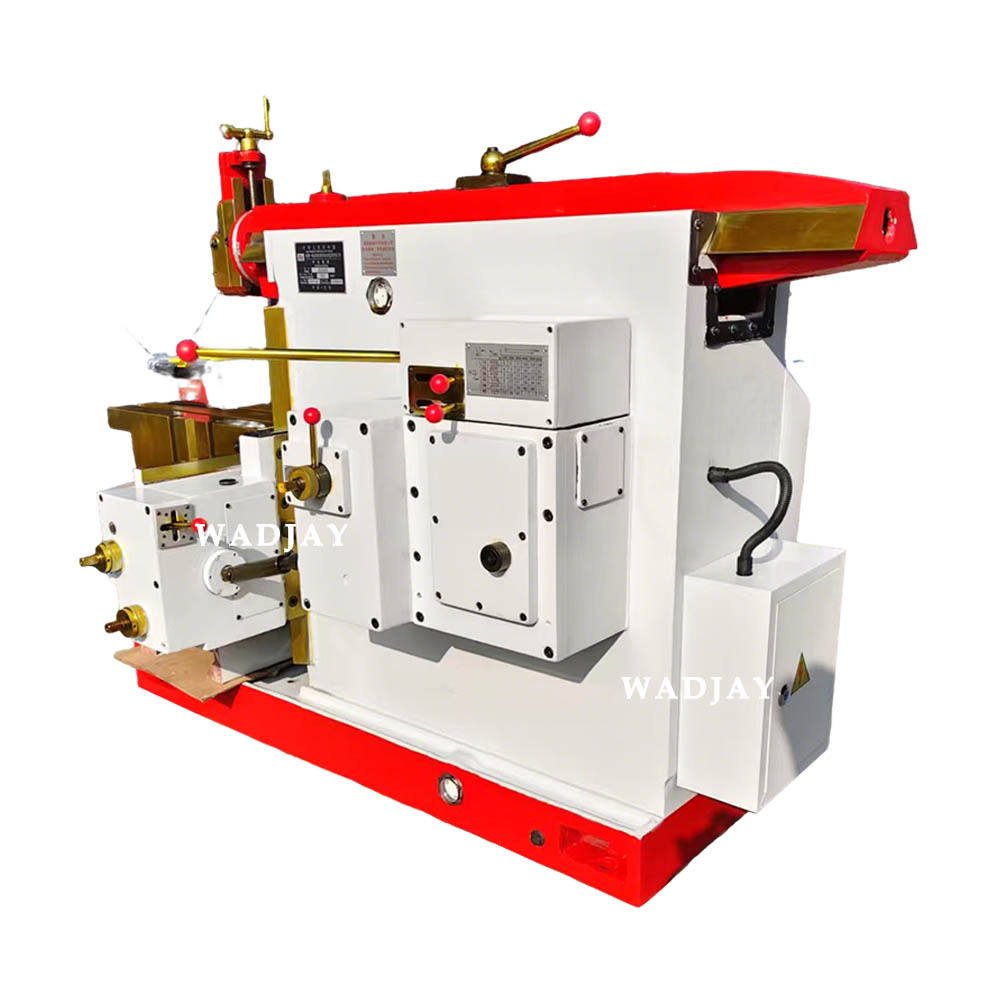
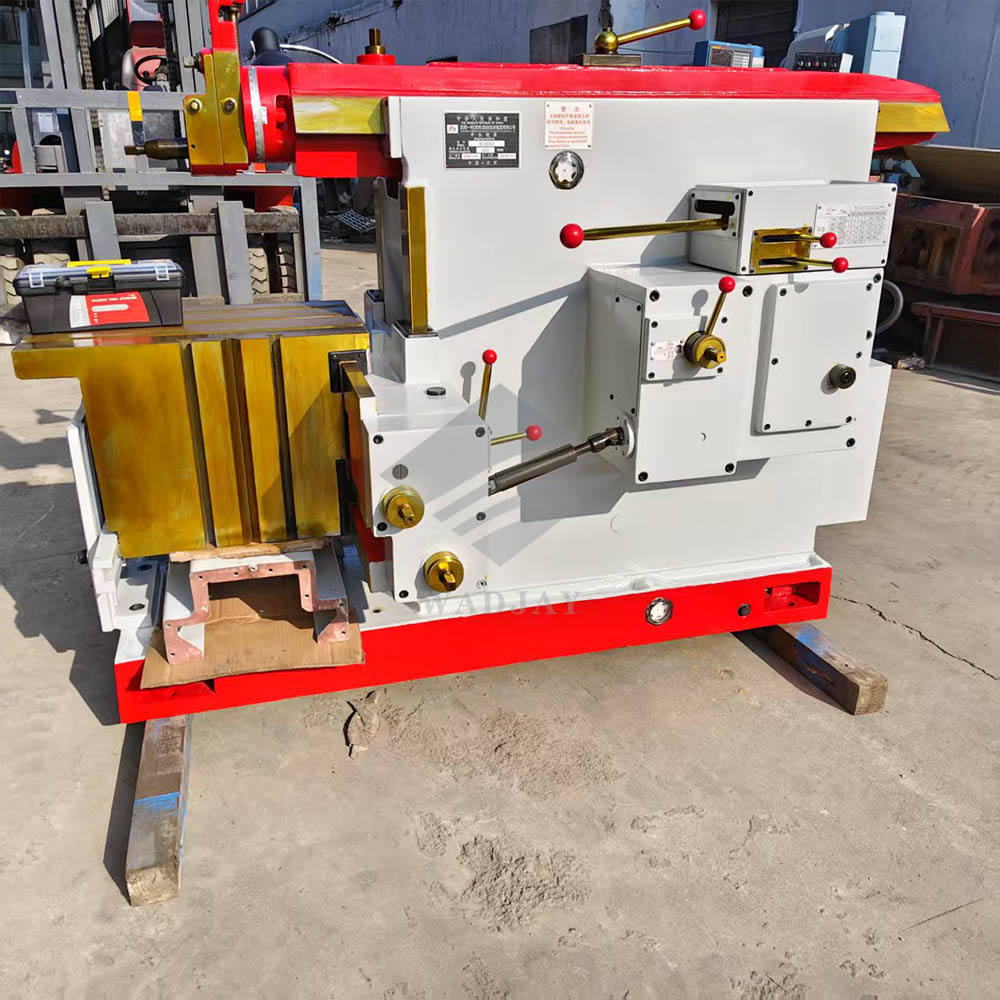
BC6063 Mechanical Shaping Machine: Precision Metal Planing for Tool Rooms and Workshops
Robust Industrial-Grade Metal Shaper for Versatile Machining Applications
In the world of precision metalworking, where reliability and accuracy are paramount for tool rooms, repair workshops, and small-scale production facilities, the BC6063 Mechanical Shaping Machine stands as a proven solution for planing flat surfaces, cutting keyways, milling slots, and shaping irregular profiles on workpieces. This industrial-grade metal shaper combines robust construction with precise mechanical operation to deliver consistent performance for both prototype development and low-volume manufacturing. Unlike more complex CNC alternatives, the BC6063’s purely mechanical design ensures exceptional reliability with minimal electronic components, making it particularly suitable for workshops that prioritize uptime, ease of maintenance, and cost-effective operation.
The shaping process is uniquely capable of producing complex profiles that are difficult to achieve with conventional milling machines—particularly internal keyways, T-slots, dovetails, and irregular contours. The BC6063 excels in these applications, making it indispensable for machinery repair, mold making, tool and die production, and custom component fabrication. With its adjustable stroke length, four-speed ram system, and precision guideways, this machine delivers consistent surface finishes and dimensional accuracy that meets demanding industrial standards, ensuring that every workpiece maintains the precise specifications required for proper fit and function in mechanical assemblies.
Technical Specifications: Engineered for Precision Performance
Comprehensive Machine Parameters
| Parameter | Unit | BC6063 Specification |
|---|---|---|
| Max. Stroke Length | mm | 630 |
| Max. Workpiece Width | mm | 630 |
| Max. Workpiece Height | mm | 400 |
| Ram Speed Range | strokes/min | 18 / 28 / 40 / 64 (4-Speed) |
| Main Motor Power | kW | 4 |
| Table Longitudinal Travel | mm | 630 |
| Table Cross Travel | mm | 180 |
| Machining Accuracy | mm | ≤ 0.03/300 |
| Net Machine Weight | kg | 2100 |
| Power Supply | — | 3 Phase 380V, 50Hz (Customizable) |
| Overall Dimensions (L×W×H) | mm | 2300 × 1200 × 1700 |
| Working Area | mm | 2300 × 1200 × 1700 |
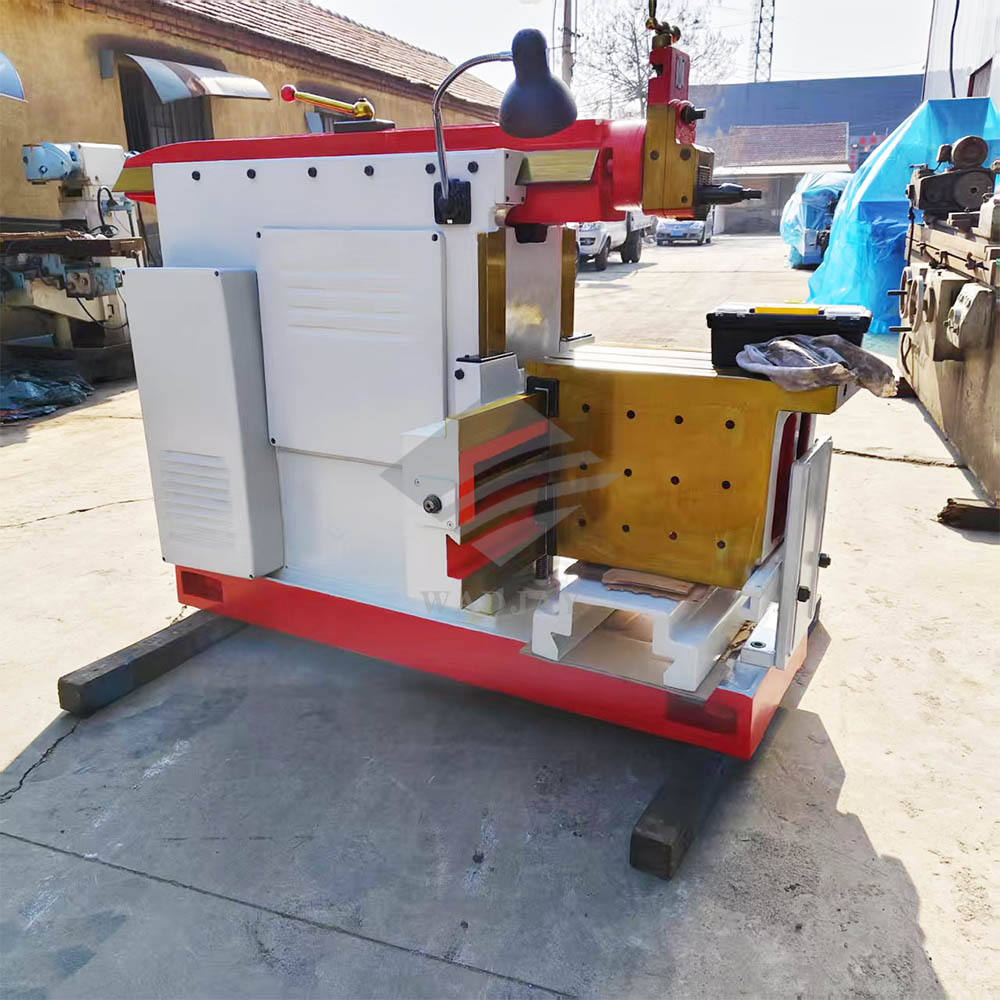
Performance Capabilities
- Material Compatibility: Cast iron, steel, aluminum, brass, and other machinable metals
- Surface Finish: Ra 3.2-6.3 μm achievable with proper tooling and setup
- Tool Shank Compatibility: Standard shaping tool holders with various insert geometries
- Workholding Options: T-slotted worktable with standard clamping accessories
- Accuracy Standards: Meets industrial precision requirements for tool room applications
- Repeatability: Consistent performance across production batches
Key Features: Transforming Metal Shaping Efficiency
1. Versatile Machining Performance for Complex Profiles
The BC6063 excels at operations challenging for conventional milling machines:
- Keyway Cutting: Precise internal and external keyways for shafts and hubs
- T-Slot Milling: Accurate T-slots for workholding and machine table applications
- Dovetail Production: Precision dovetails for machine tool slides and guides
- Irregular Contours: Complex profiles and shapes difficult with rotary cutters
- Flat Surface Planing: Large flat surfaces with consistent finish and parallelism
- Gear Tooth Forming: Basic gear tooth profiles for repair and prototyping
- Spline Cutting: Straight splines for shaft connections and couplings
- V-Groove Machining: Accurate V-grooves for alignment and tool positioning
2. Rigid & Stable Mechanical Construction
Heavy-duty design ensures precision during demanding cutting operations:
- Cast Iron Bed: High-rigidity foundation minimizes vibration and deflection
- Reinforced Ram Housing: Robust construction maintains alignment under load
- Precision Guideways: Hardened and ground ways ensure smooth ram movement
- Balanced Drive System: Minimizes vibration for improved surface finish
- Thermal Stability: Cast iron construction resists thermal deformation
- Vibration Damping: Mass and design dampen cutting vibrations effectively
- Long Service Life: Durable components withstand years of heavy use
- Maintenance Accessibility: Easy access to lubrication points and adjustments
3. Adjustable Stroke & Speed Control
Flexible operating parameters accommodate diverse materials and requirements:
- Variable Stroke Length: Adjustable from minimum to 630mm maximum
- Four-Speed Selection: 18, 28, 40, and 64 strokes per minute options
- Material Optimization: Different speeds for cast iron, steel, aluminum
- Finish Control: Lower speeds for fine finishing, higher for roughing
- Tool Life Management: Optimal speeds extend cutting tool longevity
- Operator Convenience: Easy speed change through gear selection lever
- Process Flexibility: Adaptable to different workpiece sizes and complexities
- Energy Efficiency: Appropriate speed selection reduces power consumption
4. Simple & Reliable Manual Operation
Intuitive controls reduce training time and operational complexity:
- Manual Controls: Straightforward levers and handwheels for all functions
- Quick Setup: Minimal setup time compared to CNC alternatives
- Operator-Friendly: Reduced training requirements for skilled machinists
- Direct Feedback: Tactile control provides immediate process awareness
- Minimal Electronics: Fewer components to fail or require maintenance
- Cost-Effective Operation: Lower skill requirements reduce labor costs
- Troubleshooting Ease: Simple mechanical systems are easier to diagnose
- Process Visibility: Operator can directly observe cutting action
5. Low Maintenance & Cost-Effective Design
Durable construction and standard components minimize operating costs:
- Standardized Parts: Readily available mechanical components
- Simple Lubrication: Manual oiling points with clear access
- Minimal Wear Items: Robust design reduces frequent part replacement
- Easy Servicing: Open design facilitates maintenance and repairs
- Long Component Life: Quality materials extend service intervals
- Reduced Downtime: Quick maintenance minimizes production interruptions
- Cost Predictability: Stable maintenance costs over machine lifetime
- Local Serviceability: Standard components available worldwide
6. Global Export Ready Configuration
Comprehensive certification and customization for international markets:
- CE Certification: Meets European health, safety, and environmental standards
- Voltage Flexibility: Configurable for various international power standards
- Complete Documentation: Operating manuals, parts lists, maintenance guides
- Export Packaging: Secure crating for international shipping protection
- Technical Support: Remote assistance and training available globally
- Spare Parts Availability: Worldwide distribution network for components
- Customization Options: Modifications for specific market requirements
- Compliance Ready: Documentation for customs and import procedures
Target Industries and Applications
Tool and Die Making
Essential for precision tooling components and mold manufacturing:
- Mold Bases: Flat surface planing for injection mold and die cast bases
- Tool Components: Keyways and slots for jigs, fixtures, and tool holders
- Die Sets: Precision machining of die set components and guides
- Prototype Tools: Development of custom tools and specialized fixtures
- Repair Work: Restoration of worn tooling components and surfaces
- Custom Fixtures: Manufacturing of specialized workholding devices
Machinery Repair and Maintenance
Critical for equipment restoration and component refurbishment:
- Shaft Keyways: Cutting new or repairing damaged keyways on shafts
- Bearing Housings: Machining bearing seats and housing surfaces
- Gear Repair: Reforming damaged gear teeth and profiles
- Slide Ways: Restoring machine tool ways and sliding surfaces
- Bracket Manufacturing: Producing custom brackets and support components
- Alignment Surfaces: Creating precise reference surfaces on machinery
Small-Scale Production Manufacturing
Ideal for low-volume and batch production operations:
- Custom Components: Small batches of specialized mechanical parts
- Prototype Development: Functional prototypes for testing and validation
- Job Shop Work: Versatile machine for diverse customer requirements
- Educational Projects: Training and student projects in technical schools
- Research Applications: Experimental components for engineering research
- Artisan Manufacturing: Custom metalwork for artistic and decorative items
Automotive and Transportation
Supporting vehicle maintenance and component manufacturing:
- Transmission Components: Keyways for gears, shafts, and synchronizers
- Engine Parts: Machining surfaces on engine blocks and components
- Suspension Elements: Custom brackets and mounting surfaces
- Brake System Parts: Precision surfaces for brake components
- Drive Train Elements: Splines and profiles for drive systems
- Restoration Projects: Classic vehicle restoration and part reproduction
Educational and Training Institutions
Valuable for technical education and skill development:
- Machining Fundamentals: Teaching basic shaping operations and principles
- Skill Development: Hands-on training for aspiring machinists
- Curriculum Support: Supporting mechanical engineering programs
- Vocational Training: Practical skills development for trade careers
- Safety Education: Proper machine operation and safety procedures
- Project Work: Student projects requiring metal shaping capabilities
Operational Advantages: Practical Benefits for Users
Efficiency Comparison Analysis
| Aspect | Conventional Methods | BC6063 Shaping Machine | Advantage |
|---|---|---|---|
| Setup Time | Multiple setups for complex profiles | Single setup for complete shaping | 60-70% faster |
| Tooling Costs | Specialized cutters for each profile | Standard shaping tools for multiple operations | 40-50% lower |
| Operator Skill | High skill for complex milling setups | Moderate skill for shaping operations | Easier training |
| Surface Finish | Variable depending on milling strategy | Consistent finish with proper technique | More uniform |
| Internal Features | Limited by cutter access and reach | Excellent for internal keyways and slots | Superior access |
| Maintenance Costs | Complex CNC systems require specialists | Simple mechanical design, easy maintenance | 50-60% lower |
| Energy Consumption | High-power spindle motors required | Efficient mechanical drive system | 30-40% less |
| Floor Space | Multiple machines for different operations | Single machine for diverse shaping tasks | Space efficient |
Economic Benefits Analysis
- Capital Investment: Significantly lower than comparable CNC equipment
- Operating Costs: Reduced energy consumption and maintenance expenses
- Tooling Investment: Standard cutting tools vs. specialized milling cutters
- Training Expenses: Shorter learning curve reduces training time and costs
- Versatility Value: Single machine replaces multiple specialized operations
- Reliability Savings: Minimal downtime due to simple mechanical design
- Longevity: Durable construction provides decades of service life
- Resale Value: Well-maintained mechanical machines retain value
Quality and Precision Advantages
- Dimensional Accuracy: ≤0.03/300mm precision meets tool room standards
- Surface Consistency: Uniform finish across entire workpiece surface
- Profile Accuracy: Precise reproduction of complex shapes and contours
- Repeatability: Consistent results across multiple workpieces
- Straightness: Excellent straight-line accuracy for long surfaces
- Squareness: Precise 90-degree relationships for perpendicular features
- Parallelism: Consistent parallel surfaces for mating components
- Process Control: Direct operator control over cutting parameters
Implementation and Operational Considerations
Facility Requirements
| Requirement | Specification |
|---|---|
| Floor Space | Minimum 2.5×1.5 meters for machine and operator access |
| Power Supply | 380V, 3-phase, 50Hz (configurable for other standards) |
| Foundation | Level concrete floor capable of supporting 2100kg machine weight |
| Material Handling | Overhead crane or forklift for workpiece loading (up to 500kg) |
| Lighting | Adequate workshop lighting for precision measurement and inspection |
| Compressed Air | Optional for chip removal and cleaning (6-8 bar recommended) |
| Operator Training | Basic machining knowledge and safety training required |
| Safety Clearance | Minimum 1-meter access around machine for operation and maintenance |
Tooling and Workholding Considerations
- Cutting Tools: Standard shaping tools with various insert geometries
- Tool Holders: Quick-change tool posts for efficient tool changes
- Workholding: T-slotted table with standard clamps, vises, and fixtures
- Measuring Equipment: Precision levels, indicators, and measuring tools
- Coolant System: Optional flood coolant for improved tool life and finish
- Chip Management: Chip trays and removal systems for clean operation
- Safety Equipment: Machine guards, eye protection, and proper PPE
- Accessory Storage: Organized storage for tools, fixtures, and accessories
Training and Support Services
- Comprehensive Training: Machine operation, setup, maintenance procedures
- Technical Documentation: Complete manuals covering all operational aspects
- Application Engineering: Support for process optimization and tool selection
- Preventive Maintenance: Scheduled maintenance procedures and checklists
- Spare Parts Inventory: Critical components maintained for quick delivery
- Remote Support: Online technical assistance for operational guidance
- Process Optimization: Continuous improvement support for production efficiency
- Safety Training: Proper machine operation and safety protocol instruction
Maintenance and Service Protocols
Preventive Maintenance Schedule
- Daily Checks: Lubrication levels, unusual noises, general inspection
- Weekly Maintenance: Cleaning of guideways, lubrication system check
- Monthly Service: Complete lubrication, belt tension check, alignment verification
- Quarterly Maintenance: Comprehensive inspection of gears, bearings, drive system
- Semi-Annual Service: Complete system calibration and performance verification
- Annual Overhaul: Complete machine inspection, component replacement as needed
Critical Maintenance Tasks
- Guideway Maintenance: Regular cleaning and lubrication of sliding surfaces
- Drive System: Belt tension adjustment, gear inspection, bearing lubrication
- Lubrication System: Oil level checks and regular oil changes
- Electrical System: Motor inspection, wiring integrity, safety switch testing
- Accuracy Verification: Periodic checking of machine geometry and alignment
- Safety Systems: Regular testing of emergency stops and protective guards
Frequently Asked Questions (FAQ)
Q: What materials can the BC6063 mechanical shaping machine process?
A: The machine can process a wide range of machinable metals including cast iron, steel, aluminum, brass, bronze, and various alloys. The optimal performance is achieved with materials having good machinability characteristics.
Q: What is the maximum workpiece size the machine can handle?
A: The machine can accommodate workpieces up to 630mm in width and 400mm in height. The maximum stroke length is 630mm, which determines the maximum length of surfaces that can be planed in a single pass.
Q: How accurate is the machining capability?
A: The machine achieves an accuracy of ≤0.03mm over 300mm, making it suitable for tool room applications and precision component manufacturing. This level of precision meets industrial standards for most shaping operations.
Q: What is the difference between a shaping machine and a planing machine?
A: Shaping machines move the cutting tool in a linear reciprocating motion while the workpiece remains stationary. Planing machines move the workpiece under a stationary tool. The BC6063 is a shaper, ideal for smaller to medium-sized workpieces.
Q: How does this machine compare to CNC milling for similar operations?
A: While CNC milling offers more flexibility for complex 3D contours, the shaping machine excels at producing straight-line features like keyways, slots, and flat surfaces. It’s more cost-effective for these specific operations and requires less programming and setup time.
Q: What maintenance is required for optimal performance?
A: Regular maintenance includes daily lubrication checks, weekly cleaning of guideways, monthly complete lubrication, and quarterly inspections of drive components. The simple mechanical design makes maintenance straightforward and cost-effective.
Q: Can the machine be customized for specific applications?
A: Yes, the machine can be customized with specific tooling, workholding fixtures, and optional accessories like coolant systems, chip conveyors, and specialized measuring equipment to suit particular application requirements.
Q: What training is provided for operators?
A: Comprehensive training includes machine operation, setup procedures, tool selection and mounting, workholding techniques, maintenance procedures, and safety protocols. Training typically requires 3-5 days of hands-on instruction.
Q: What safety features are included?
A: Safety features include emergency stop buttons, mechanical guards for moving parts, safety interlocks where applicable, and comprehensive electrical safety systems. The machine is CE certified for European safety standards.
Q: What is the typical delivery and installation timeline?
A: Standard delivery is 30-45 days after order confirmation. Installation and commissioning typically require 2-3 days, followed by 3-5 days of operator training. Custom configurations may require additional time.
-300x300.png)